
You can keep your blades battle-ready wherever you go with the Blade Professor.

Quick verdict
You get a compact, pocket‑sized sharpener and multi‑tool that tackles routine edge damage fast, fits easily into everyday carry, and gives you small-tool functionality for field repairs. For $24.90, the Blade Professor is a high-value accessory if you regularly use knives for outdoors, fishing, hunting, or daily tasks.
What the Blade Professor is and who it’s for
What it does
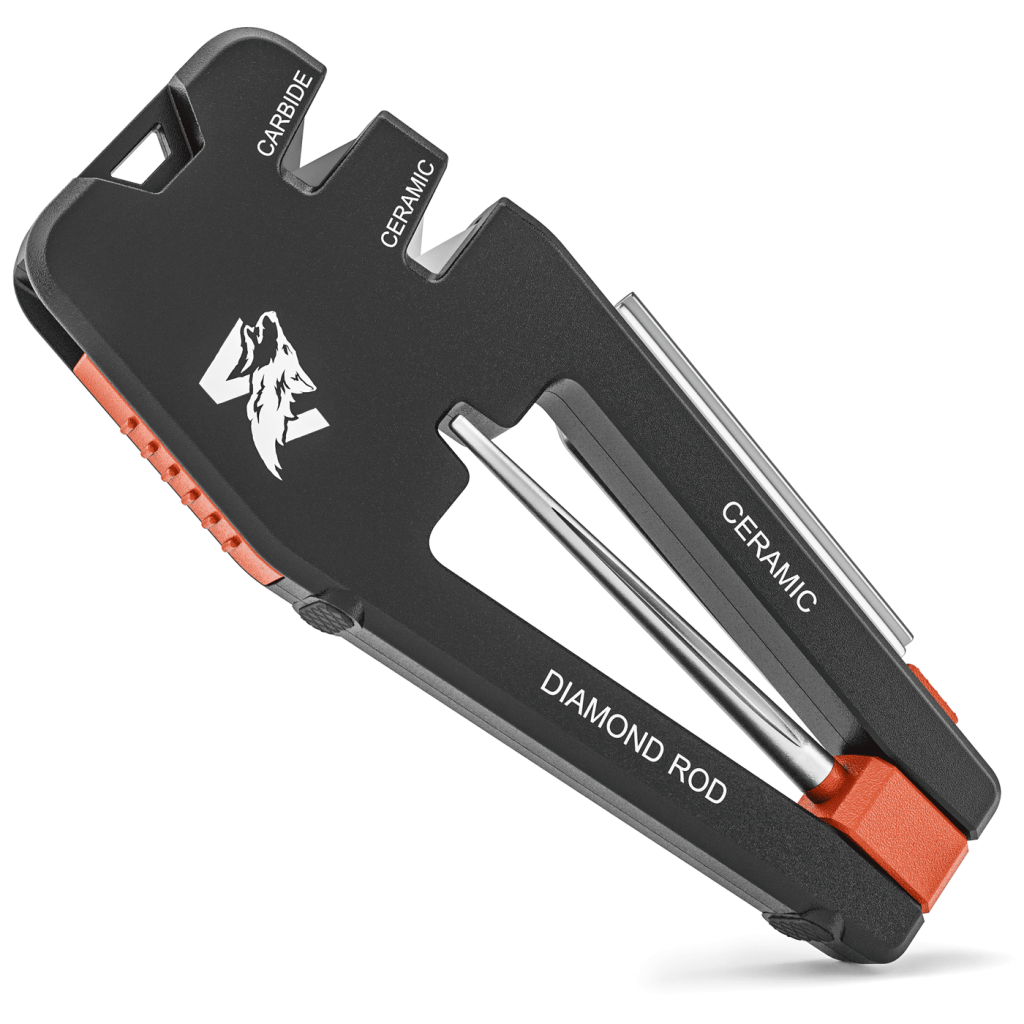
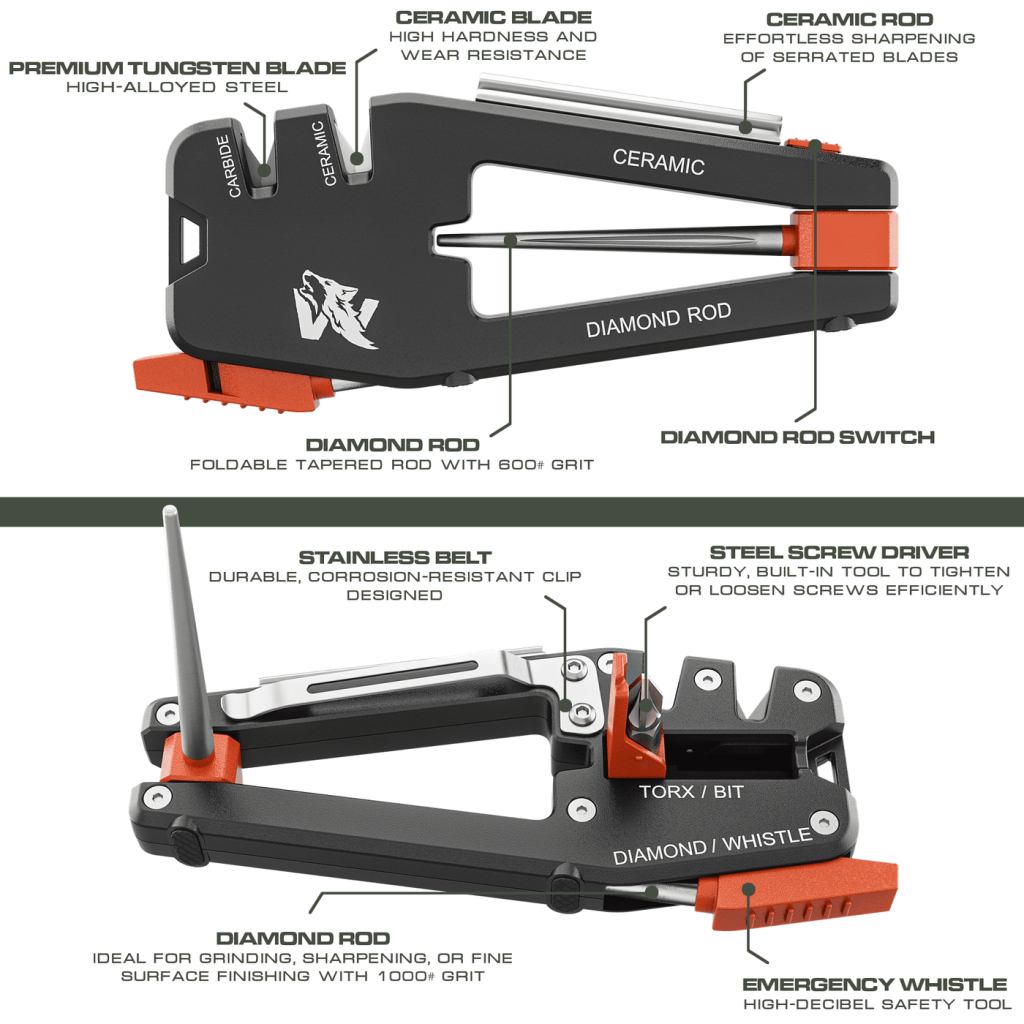
The Blade Professor is a multi-function everyday carry (EDC) sharpener and quick‑fix tool. It combines two main sharpening slots (tungsten carbide for reshaping and ceramic for honing) with diamond rods for precision finishing and a built‑in Torx screwdriver. It also includes an emergency whistle and a stainless‑steel belt/pocket clip so you can keep it on you without fuss.
Who will benefit
You benefit from the Blade Professor if you:
- Carry knives or cutting tools regularly (pocket knives, hunting knives, fillet knives).
- Fish frequently and need hook and fillet-knife maintenance.
- Spend time outdoors for hunting, camping, or bushcraft and want a compact sharpening option.
- Want a simple, fast way to restore edges in the field rather than carrying bulky sharpening systems.
- Appreciate a little tool that also helps with minor repairs and safety (Torx screwdriver, whistle).

Key features at a glance
- Two sharpening slots: tungsten carbide (coarse) for quick edge reshaping and ceramic (fine) for honing and polishing.
- Diamond rods for precise finishing, narrow edges, hooks and partial serration work.
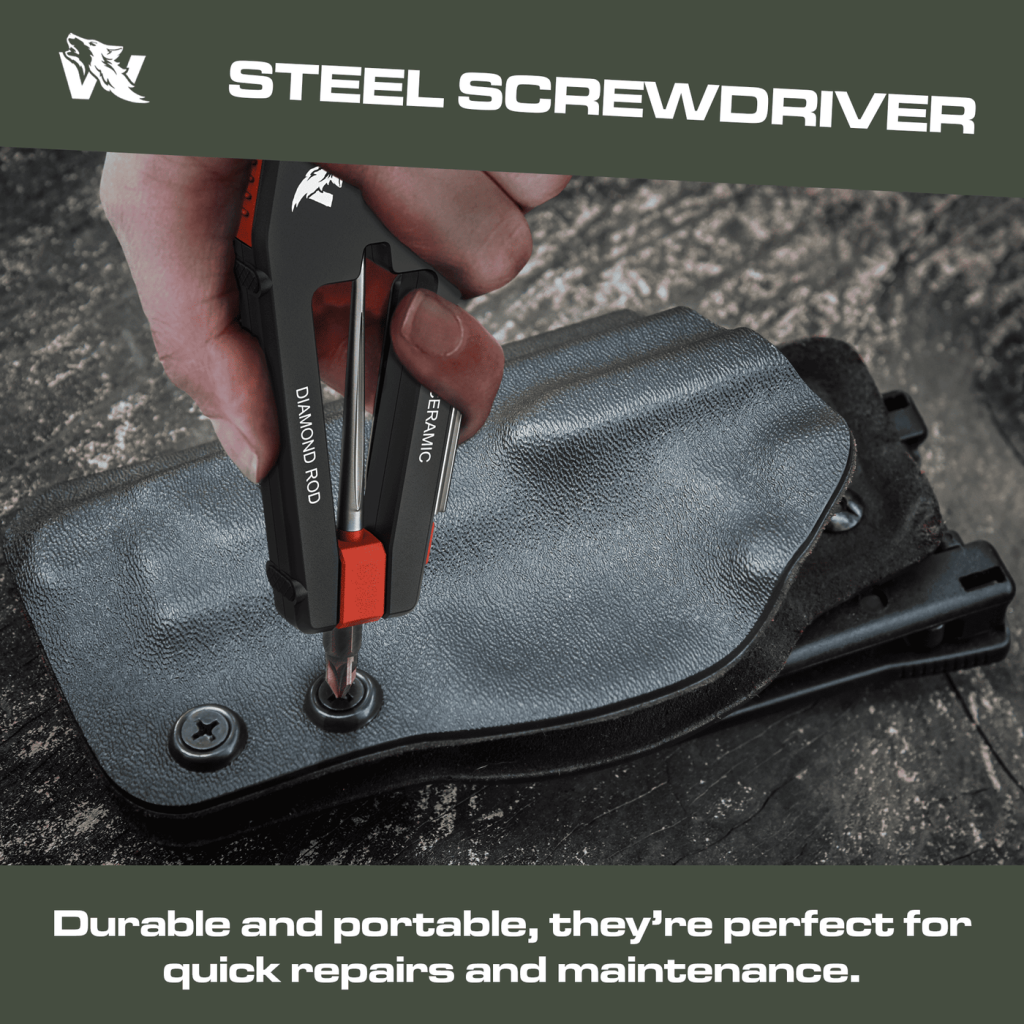
- Built‑in Torx screwdriver for quick field repairs.
- Emergency whistle for safety.
- Stainless‑steel belt/pocket clip for secure carry.
- Compact, lightweight design: total length 4.49 in, weight 6.70 oz.
Specifications table
| Feature | Specification |
|---|---|
| Product name | Blade Professor |
| Function | Compact EDC sharpener & multi‑tool |
| Sharpening materials | Tungsten carbide (coarse), ceramic (fine); diamond rods included |
| Extra tools | Built‑in Torx screwdriver, emergency whistle, stainless‑steel clip |
| Total length | 4.49 in |
| Height | 1.69 in |
| Width | 0.47 in |
| Weight | 6.70 oz |
| Clip | Stainless steel |
| Price | $24.90 (tax included) |
| Shipping | FREE within the U.S. |
| Support | Every purchase supports veterans (Bob Woodruff Foundation) |
| Recommended by | Experts and outdoor enthusiasts from ODENWOLF |
| Guarantee | High quality standards and satisfaction guarantee |
Design and build quality
Compactness and carry
You’ll notice the Blade Professor was designed specifically with pocket carry in mind. At 4.49 inches long and under 7 ounces, it fits comfortably in a pocket or clipped to a belt without being bulky. The stainless‑steel clip is firm enough to hold the tool in place but allows easy retrieval. Because it’s compact, you’ll be more likely to actually have it when you need it.
Materials and construction
The main sharpening slots use tungsten carbide and ceramic elements — proven, durable materials for edge restoration and honing. The included diamond rods add the capability to work on fine points and narrow bevels that the slots can’t reach. The housing feels sturdy and utilitarian rather than fragile. The Torx screwdriver is integrated neatly and is practical for common screw sizes encountered on pocket knives and small gear. The emergency whistle is a small but meaningful addition for outdoors use.
Ergonomics and safety
The Blade Professor’s shape gives you a secure grip during sharpening. The slots are oriented and shielded so you’re less likely to slip onto the blade with repeated strokes. The compact form makes single‑handed use feasible for quick touchups, and the clip and whistle add to its safety and convenience profile.
How it sharpens: performance breakdown
Tungsten carbide slot (coarse)
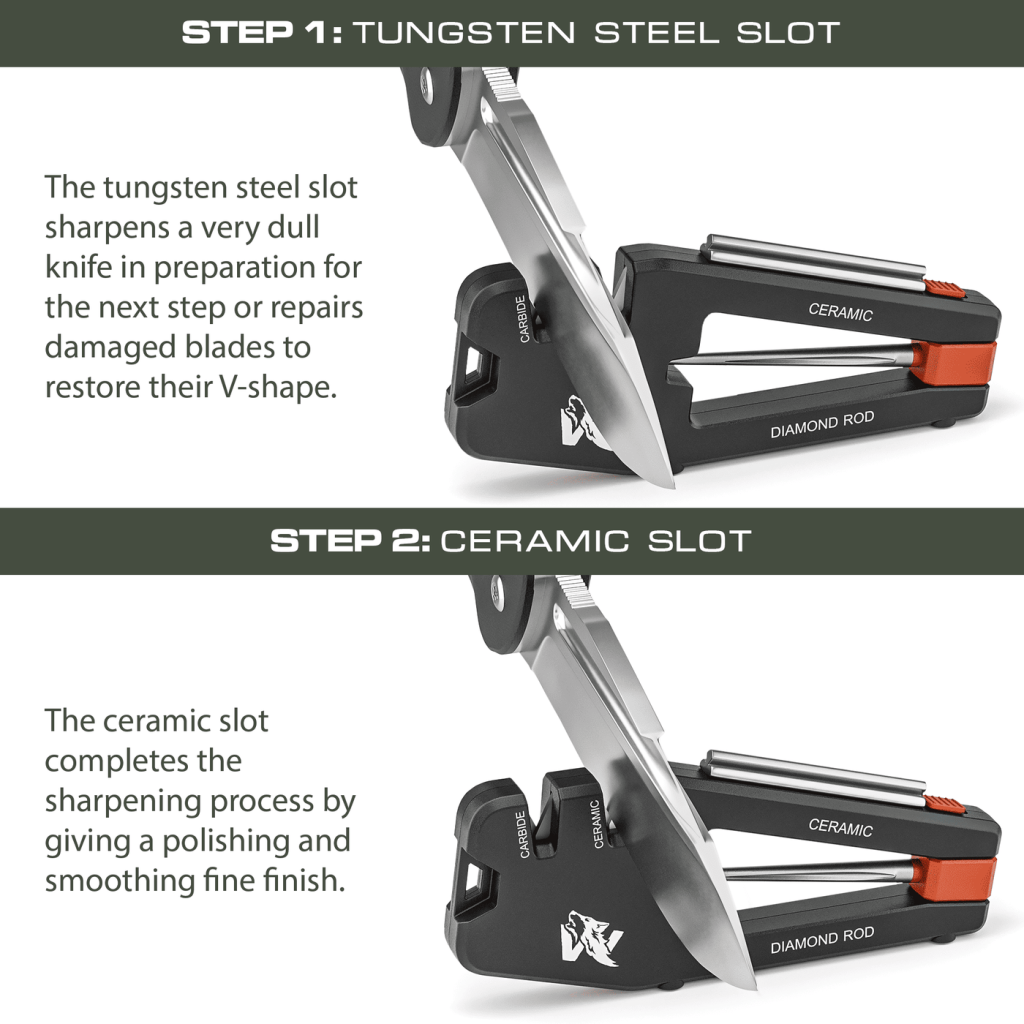
When you need to rebuild a damaged or blunt edge quickly, the tungsten carbide slot is where you start. It removes metal quickly and sets a new bevel in seconds. You’ll use light to moderate pressure and pass the blade through the slot several times (5–10 passes depending on dullness). The tungsten carbide is best for:
- Chips and nicks.
- Edges that have rolled or flattened.
- Quick edge reestablishment in the field.
Tips for use: Hold the sharpener steady and maintain a consistent angle by letting the slot guide the blade. Avoid excessive pressure — let the carbide do the cutting. Check progress frequently to avoid over‑grinding.
Ceramic slot (fine)
Once the edge is reformed, the ceramic slot refines and polishes the bevel. You’ll make fewer passes here — maybe 5–8 light stropping strokes — to remove burrs and increase edge refinement, which translates into better cutting performance and longer edge life between touchups.
Tips for use: Use light pressure and smooth, consistent strokes. The ceramic element is ideal for bringing a razor‑like finish to a knife that was quickly rebuilt by the carbide.
Diamond rods (precision finishing)
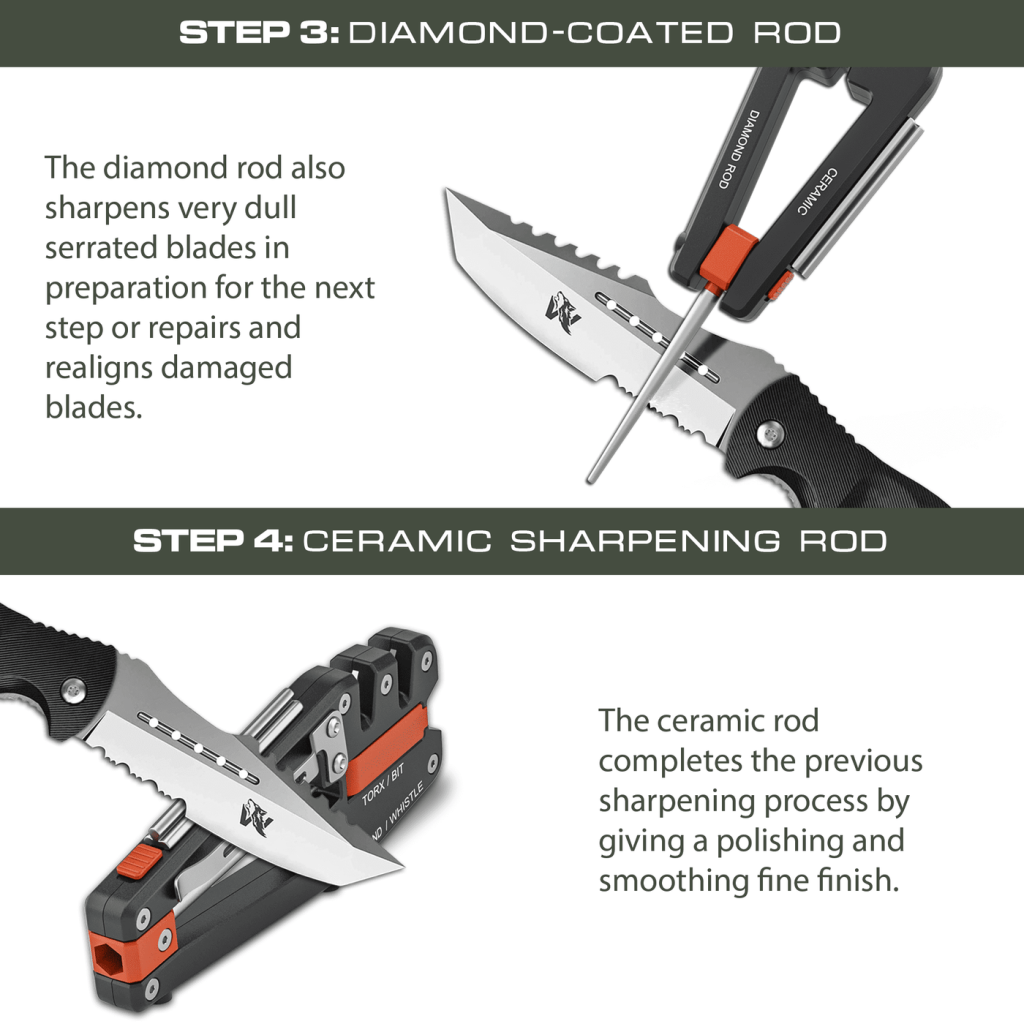
The diamond rods are one of the Blade Professor’s most valuable features because they let you access narrow areas and finish edges precisely. Use them for:
- Narrow straight razors or very thin blades.
- Serrated edges where you work each scallop separately.
- Fishing hooks and other curved or tight profiles.
Diamond rods are aggressive enough to finish efficiently but controlled when you work carefully. They’re also you go‑to for putting an exact microbevel on the edge for improved slice performance.
Serrations and hooks
Serrated knives are notoriously difficult to sharpen with standard slot sharpeners. The Blade Professor’s diamond rods give you targeted control to reshape and touch up serration scallops. You can remove burrs and restore the points of each serration without flattening the entire edge. For fishing hooks, the rods allow you to reprofile points quickly so hooks remain effective on the water.
Real-world sharpening scenarios
Field utility for anglers
When you’re on a boat or riverbank and your fillet knife starts dragging, the Blade Professor lets you get a working edge back quickly. Use the carbide slot for any deformed sections, finish with the ceramic slot for a smoother cut, and touch up tip areas or hook points with diamond rods. Because it’s small, you can keep it in a tackle box or clipped to a vest.
Hunting and camping
You can fix a hunting knife’s edge between tasks: cape, skin, or food prep. The Torx screwdriver is convenient for tightening loose hardware on knives or gear. The whistle adds a layer of safety if you’re in remote terrain and need to signal.
Everyday carry
For general EDC, the Blade Professor is a reliable maintenance tool. It’s quicker than whetstones and more capable than pocket ceramic rods alone. You’ll find you use it for small fixes, like maintaining your daily pocket folder for paper cutting, food prep, and small chores.
How to use the Blade Professor — step-by-step
Basic step sequence for most knives
- Secure the tool with one hand by holding the body or clipping it to a stable location if possible.
- Use the carbide slot first if the blade feels very dull or if you notice chips/rolls. Place the blade tip in the slot and draw the blade through at a steady motion from heel to tip. Keep the blade perpendicular to the sharpened slot so the guided angle remains consistent. 5–10 passes is typical.
- Move to the ceramic slot and perform light, even passes (heel to tip) to remove burrs and polish the edge (around 5–8 passes).
- If the tip is narrow or if you need precise touchups, use the diamond rods. Run the rod along the bevel at the same angle you used for the slot sharpening. Work gently until you achieve the desired finish.
- Wipe the blade and test on paper or a gentle slice to confirm sharpness. Repeat light ceramic passes if necessary.
Sharpening serrations and hooks
- Identify each serration scallop that needs attention.
- Use the diamond rod sized to match the scallop radius. Place the rod in the scallop and make short, controlled strokes along the length of the scallop. Work from the tip toward the base.
- Lightly strop or use a fine ceramic pass against the scalloped section if you can, but usually the rod alone is sufficient for point reconditioning.
- For hooks, hold the hook steady and run the rod along the hook point and edge until sharp.
Using the Torx screwdriver
The Torx screwdriver is practical for tightening pocket knife screws, hinge pivots, and other small hardware. Keep a couple of controlled turns and check the tension — don’t overtighten, especially on pivot screws; you want smooth action without play.
Maintenance and care for the Blade Professor
- Clean metal filings off the slots and rods after use with a brush or compressed air.
- Avoid immersing the tool in water; wipe it dry after cleaning.
- Store in a dry place to prevent any corrosion on metal components (clip and Torx).
- The tungsten carbide and ceramic elements are long‑lasting; only replace if chipped or excessively worn.
- Diamond rods will wear slowly over time and can be cleaned with a brush and mild solvent if gummed.
- Check the clip for tension occasionally to ensure secure carry.
Pros and cons
Pros
- Very compact and pocketable — encourages regular carry.
- Quick and effective edge restoration using a two‑stage approach (carbide + ceramic).
- Diamond rods provide precision for serrations, hooks and narrow bevels.
- Built‑in Torx driver is practical for field repairs.
- Emergency whistle and clip add safety and carry convenience.
- Affordable price for the feature set ($24.90 with free U.S. shipping).
- Purchase supports veterans (Bob Woodruff Foundation) and carries a satisfaction guarantee.
- Recommended by ODENWOLF and outdoor experts.
Cons
- Not a replacement for full bench stones if you need perfectly refined, full-length bevels or specialized angles.
- Slot sharpeners set a single guided angle and may not suit every knife maker’s preferred angle without practice.
- Very damaged or very large blades may take longer to restore with a compact tool.
- Limited leverage for heavy grinding compared to larger systems.
Side‑by‑side: Blade Professor vs common alternatives
| Feature | Blade Professor | Pocket Ceramic Rod | Mobile Sharpening Systems (multi‑stage kits) |
|---|---|---|---|
| Portability | Excellent (compact clip) | Excellent | Poor to moderate |
| Speed of edge restoration | Fast (carbide + ceramic) | Moderate (fine only) | Moderate to slow (depends on stones) |
| Precision for serrations/hooks | Good (diamond rods) | Limited | Good (with appropriate tools) |
| Extra tools (Torx, whistle, clip) | Yes | No | Sometimes |
| Cost | $24.90 | $5–$20 | $30–$200+ |
| Best for | EDC/outdoors quick fixes | Light touchups | Bench sharpening, full restorations |
Troubleshooting common issues
- If the blade still cuts poorly after a few passes, you may be working at the wrong angle or not using the carbide for reshaping. Try more controlled carbide passes to reform the bevel.
- If the blade feels rough after sharpening, finish with extra ceramic passes. Too much carbide work without ceramic finishing can leave a coarse edge.
- If the Torx bit feels loose or stripped, stop using it and check screw head condition — replace or use a proper bit if the screw is damaged.
- If the clip loosens over time, tighten any clip screws (if serviceable) or use a small adjustment to restore tension — if worn, consider contacting the seller for warranty/service options.
Practical tips for best results
- Let the tool guide the angle. For most pocket knives, the Blade Professor’s guided angle is suitable and consistent.
- Use gentle pressure on the ceramic stage; aggressive force shortens the life of the polishing element and risks skipping.
- Count passes and test frequently — you’ll learn how many strokes your typical knives need.
- For high‑end or specialty blades, use the Blade Professor for touchups and carry a proper stone for periodic, full maintenance.
- Keep a small cloth and a brush in your EDC to clear metal filings after sharpening.
Value and cost justification
At $24.90, the Blade Professor is priced to be an impulse buy for many EDC enthusiasts but delivers real utility. Compare the cost to the inconvenience of a dull knife in the field — lost time, reduced safety, and inferior task performance. The combination of carbide, ceramic, diamond rods, a Torx driver, and an emergency whistle provides a lot of utility at this price. Free U.S. shipping sweetens the value, and knowing part of purchase proceeds support veterans gives extra moral value.
Durability and longevity expectations
You can expect the tungsten carbide and ceramic elements to last a long time under normal usage. Diamond rods will also last for many sharpening sessions. The housing, clip, and Torx driver are designed for everyday use but may show cosmetic wear over time. With regular cleaning and proper use, the Blade Professor should provide years of service as an EDC tool.
Comparison with professional sharpening
If you want a factory‑level mirror finish or specific compound bevel geometries, bench stones and guided systems performed by a sharpening professional remain the gold standard. However, the Blade Professor is not trying to replace that — it’s a field/EDC tool to maintain usable, sharp edges between full services. Think of it as the maintenance tool that keeps your blades working until a full tune‑up is needed.
Packaging, warranty and support
You’ll get the Blade Professor with clear instructions for use. The manufacturer emphasizes quality standards and a satisfaction guarantee; check the seller’s return policy and warranty terms if you expect heavy or warranty‑covered usage. Free U.S. shipping and the charitable support (Bob Woodruff Foundation) are nice extras that add non‑technical value.
Who should buy the Blade Professor
Buy the Blade Professor if you:
- Want a compact, everyday carry sharpener with fast, reliable performance.
- Need a multi‑tool that also offers a Torx driver for common field repairs.
- Regularly fish, hunt, camp, or work outdoors and want an on‑hand maintenance solution.
- Prefer a single tool that handles both coarse reprofile and fine honing quickly.
- Are on a budget but still want quality materials (tungsten carbide, ceramic, diamond rods) in a small package.
Don’t buy the Blade Professor if you:
- Require professional, ultra‑fine edge profiling or thick blade reprofiling on a very large knife.
- Prefer to maintain all knives only with bench stones and professional setups.
- Need completely modular angle control beyond what the guided slots offer.
Frequently asked questions (FAQs)
Will it sharpen all types of steel?
You can sharpen most common knife steels with the Blade Professor. Very hard steels will take longer to reprofile, but the carbide and diamond rods will still work. For very high‑hardness specialty steels, you may prefer dedicated stones for full reprofiling.
Is it safe to use on serrated knives?
Yes — use the diamond rods to work each serration scallop carefully. You’ll restore the tips of serrations without flattening the entire edge.
Can I sharpen scissors or other tools?
The Blade Professor is optimized for knives and hooks. Small, single‑edge hand tools can often be touched up, but scissors and larger shears may not sit correctly in the slots. Use judgement and test lightly.
How often should I use it?
Use it whenever you need a reliable edge. For frequent users, a quick touchup weekly or after heavy use is reasonable. For occasional users, a touchup per trip or when you feel drag is appropriate.
Final thoughts
You’ll find the Blade Professor to be an effective, compact, and affordably priced EDC sharpener and multi‑tool. It balances quick, guided sharpening with precision options (diamond rods) and practical extras (Torx driver, whistle, clip). If you want the convenience of restoring edges in minutes and keeping knives functional on the go, the Blade Professor gives you that capability without a large investment. The tool is particularly suited for outdoors enthusiasts, anglers, hunters, and anyone who values a sharp blade as part of their everyday carry.
Ready for your next trip? Add the Blade Professor to your kit for $24.90 and keep your blades sharp and ready.


Eric runs EverydayField.com, a gear review site built around honest testing and practical recommendations for knives, flashlights, and everyday outdoor tools.